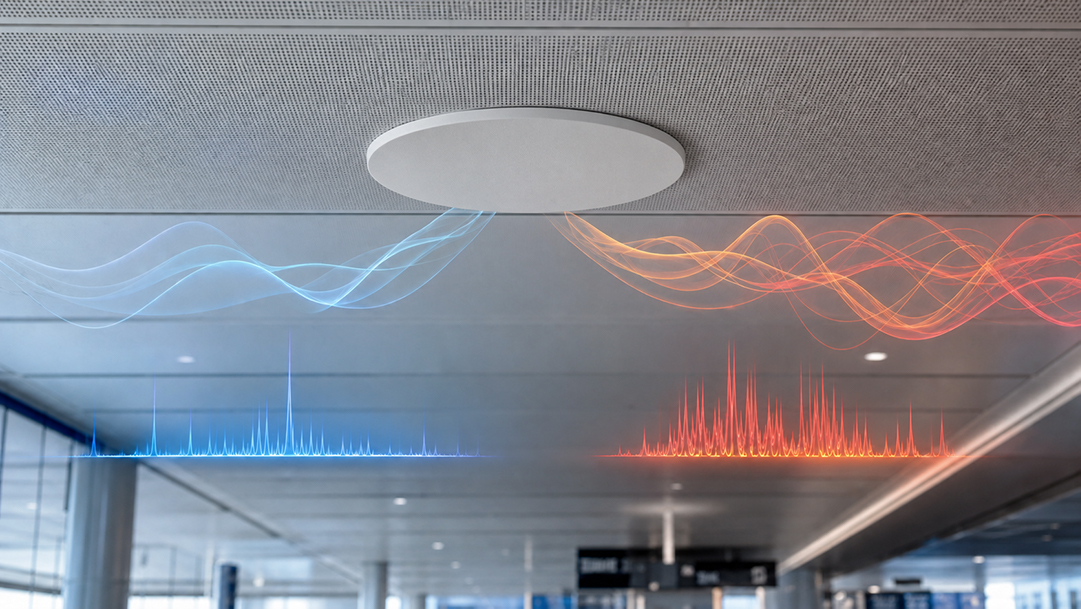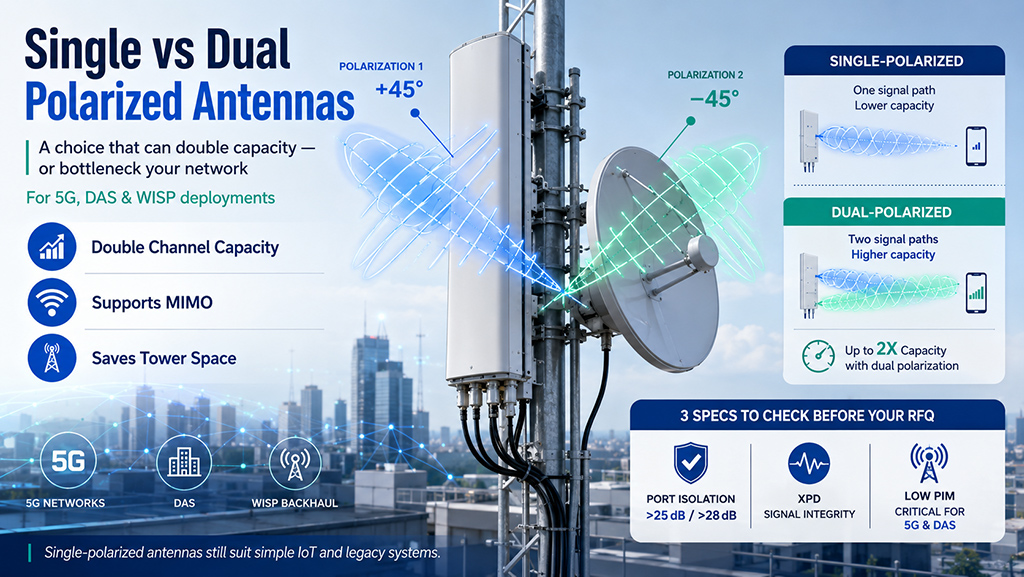
يقوم الهوائي مزدوج الاستقطاب بإرسال واستقبال الإشارات اللاسلكية على مستويين متعامدين في وقت واحد، وعادةً ما يستخدم ميل بزاوية ±45° أو محاذاة عمودية وأفقية (V/H). يضاعف هذا التصميم من سعة القناة، ويقلل من الخفوت متعدد المسارات، ويدعم تطبيقات MIMO دون زيادة المساحة المادية للتركيب.

عند شراء هوائيات لمشروع DAS أو إنترنت الأشياء أو الاتصالات، يمكن أن يؤدي سوء تفسير ورقة البيانات إلى فشل مكلف في النشر. ينظر العديد من المشترين إلى ورقة المواصفات، ويرون رقمًا مرتفعًا بجوار كسب الهوائي، ويفترضون على الفور أن المنتج سيقدم إشارة قوية عبر مسافات طويلة. ومع ذلك، في هندسة الترددات اللاسلكية، يعتبر الكسب النظري جزءًا واحدًا فقط من المعادلة.

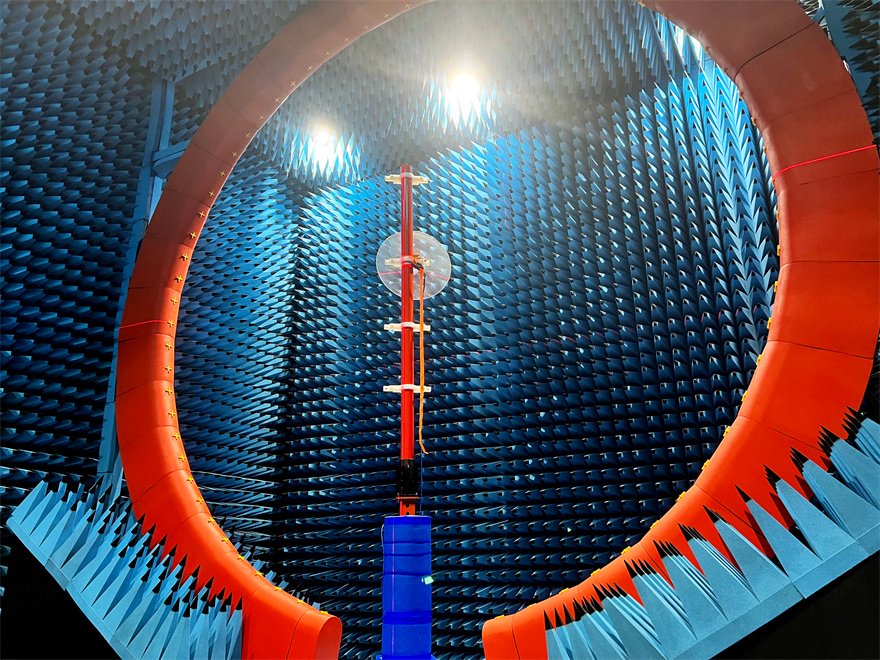
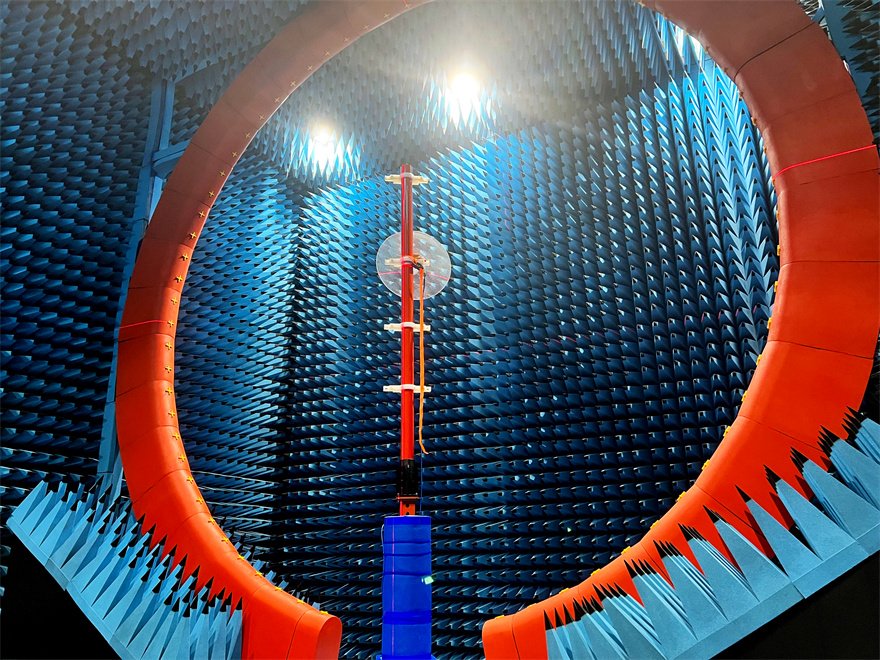
تستخدم BBT ANTENNAS غرفة عديمة الصدى للموجات الدقيقة لتقييم كيفية تصرف الهوائي قبل الموافقة على التصميم المخصص. تقلل البيئة الخاضعة للرقابة من الانعكاسات وتداخل الترددات اللاسلكية الخارجي، مما يمنح المهندسين رؤية أوضح للكسب ونمط الإشعاع والكفاءة والاستقطاب وعرض الشعاع. يتم فحص نسبة الموجة الواقفة للجهد (VSWR) وفقد العودة باستخدام محلل شبكة متجه كجزء من نفس سير عمل اختبار الهوائي.

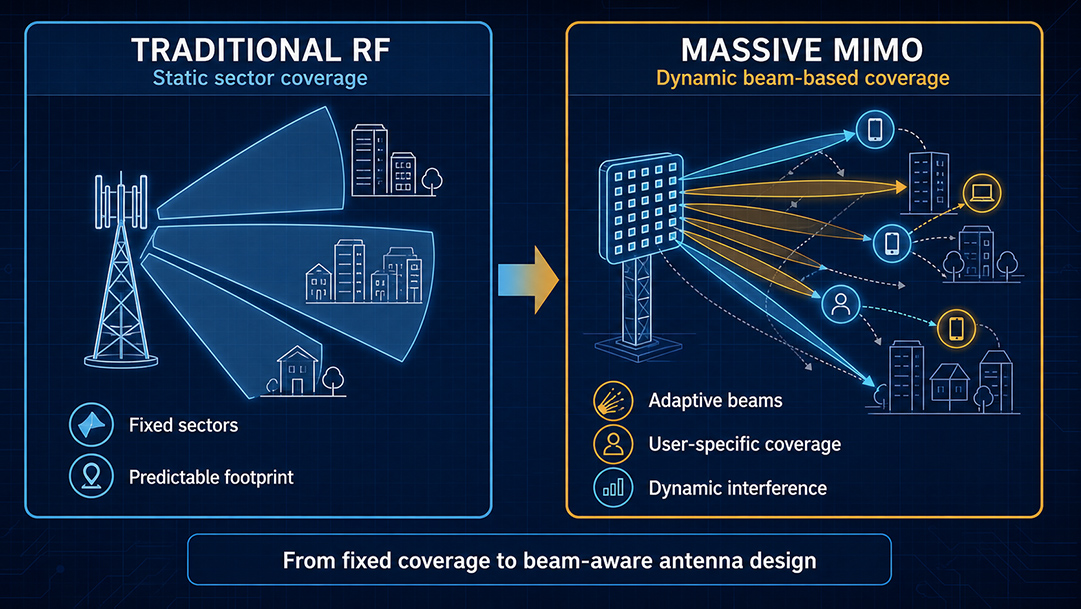
بالنسبة للمشترين، يبدأ تصميم هوائي 5G MIMO بتفاصيل الترددات اللاسلكية العملية: نطاق التشغيل، وعدد المنافذ، والاستقطاب، وعرض الشعاع، ونمط الإشعاع، والعزل، والموصل، وبيئة التثبيت. تؤثر هذه الخيارات على ما إذا كان مشروع 5G أو DAS أو القطاع أو اللاسلكي الخاص يحصل على أجهزة الترددات اللاسلكية المناسبة لظروف الموقع الخاص به.

Modern architecture is designed to be resilient and energy-efficient. However, the very materials that make up today’s commercial buildings, hospitals, and shopping malls—such as reinforced concrete, steel frames, and Low-E glass—act as formidable barriers to Radio Frequency (RF) signals. The result? Frustrating "dead zones," dropped calls, and sluggish data speeds that hinder business operations and degrade the user experience.
To overcome these physical barriers and ensure reliable connectivity, telecommunication engineers and system integrators rely on the In-Building Solution (IBS). This comprehensive guide explores how an IBS works, its core components, and why selecting high-quality DAS antennas is critical for future-proof indoor coverage. 5G DAS Antennas

Learn how bandwidth changes across LF, MF, HF, VHF, UHF, SHF, and EHF frequency bands, and how RF spectrum affects 5G, WiFi, IoT, RFID, satellite, radar, and antenna design. VHF antenna

In antenna design, gain and directivity are two important parameters. They are closely related, but they are not the same.
For engineers, system integrators, and buyers, understanding the difference between antenna gain and directivity is essential when selecting antennas for 4G, 5G, WiFi, DAS, RFID, IoT, satellite, and RF communication systems. 5g antenna

BBT ANTENNAS INC is thrilled to exhibit at CCW 2026 in London. As a dedicated manufacturer of high-performance communication antennas, we are bringing our latest connectivity solutions to the global stage.
If you are looking for robust and reliable antenna solutions for critical infrastructure, come meet our team. We will be showcasing our comprehensive range of products, including:
🔹 4G & 5G Antennas
🔹 WiFi & DAS Antennas
🔹 RFID Antennas

Explore the UHF RFID mat antenna for 902–928 MHz RFID systems. Designed with IP67 waterproof protection, forklift-passable rubber structure, 2–3 m read range, and EU 860–868 MHz customization.