
إجابة سريعة: غالبًا ما توصف Massive MIMO بأنها هوائيات أكثر. بالنسبة لمشاريع الهوائيات، فإن السؤال العملي هو النطاق وعدد المنافذ والاستقطاب وعرض الشعاع وبيئة التثبيت التي يحتاجها النشر.
بالنسبة للمشترين، يبدأ تصميم هوائي 5G MIMO بتفاصيل الترددات اللاسلكية العملية: نطاق التشغيل، وعدد المنافذ، والاستقطاب، وعرض الشعاع، ونمط الإشعاع، والعزل، والموصل، وبيئة التثبيت. تؤثر هذه الخيارات على ما إذا كان مشروع 5G أو DAS أو القطاع أو اللاسلكي الخاص يحصل على أجهزة الترددات اللاسلكية المناسبة لظروف الموقع الخاص به.
الميمو ليس فقط حول إضافة المزيد من منافذ الهوائي
تعني MIMO مدخلات ومخرجات متعددة. في توريد الهوائيات، يظهر هذا عادةً على شكل 2T2R أو 4T4R أو تكوينات أخرى متعددة المنافذ. يمكن أن تدعم المزيد من المنافذ المزيد من مسارات الترددات اللاسلكية، ولكن لا يزال يجب أن يتطابق الهوائي مع نطاق التردد، وهدف الكسب، والاستقطاب، والعزل، والنمط، والموصل، وبيئة التثبيت.
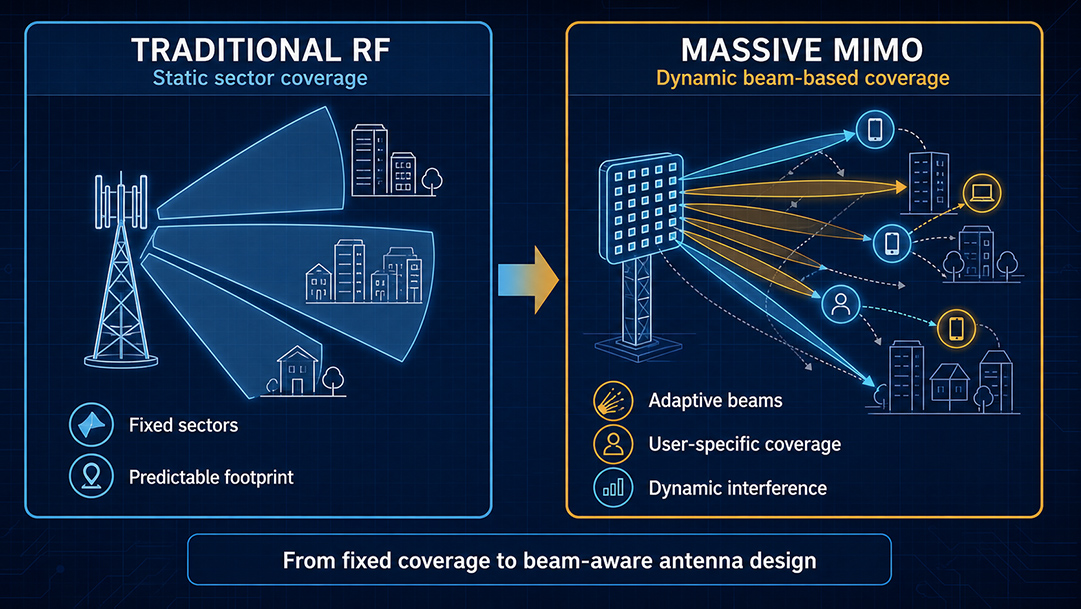
تستخدم Massive MIMO مصفوفات هوائيات أكبر وسلوك شعاع أكثر تقدمًا في شبكات 5G. هذا لا يعني أن كل مشترٍ بحاجة إلى شراء منتج بأعلى عدد من المنافذ. بالنسبة للعديد من مشاريع DAS، واللاسلكية الخاصة، وتغطية القطاع، فإن نقطة البداية الأفضل هي متطلبات الموقع: مكان تواجد المستخدمين، والنطاقات النشطة، وحجم السعة المطلوبة، وكيف سيتم تثبيت الهوائي.
للمشترين: يجب أن يتضمن طلب هوائي 5G MIMO المفيد النطاق وعدد المنافذ والاستقطاب وعرض الشعاع والموصل وطريقة التثبيت وسيناريو التطبيق. نادرًا ما يكون اسم الجزء وحده كافيًا.
ابدأ بالنطاق وعدد المنافذ ونوع النشر
قرار التوريد الأول ليس ما إذا كان الهوائي يبدو متقدمًا. بل ما إذا كان المنتج يطابق النشر. هوائي 4T4R لنظام DAS الداخلي، وهوائي تثبيت على الحائط لتغطية الممرات، وهوائي قطاع MIMO للتغطية اللاسلكية الخارجية ليست قابلة للتبديل، حتى عندما يكون جميعها مرتبطًا بـ 5G أو MIMO.
| نوع النشر | اختيار الهوائي الشائع | ما يجب على المشترين التحقق منه |
|---|---|---|
| تغطية DAS الداخلية | هوائي MIMO للسقف أو للتثبيت على الحائط | نطاق التردد، وعدد منافذ 2T2R أو 4T4R، واحتياجات PIM المنخفضة، ونوع الموصل، وارتفاع السقف، وتخطيط الغرفة أو الممر. |
| منطقة داخلية عالية السعة | هوائي 4T4R | تخطيط بأربعة منافذ، واستقطاب +/-45 درجة، وعزل من منفذ إلى منفذ، وVSWR، والكسب حسب النطاق، وموضع التثبيت. |
| تغطية القطاع الخارجي | هوائي قطاع MIMO | عرض الشعاع الأفقي والرأسي، والكسب، ونسبة الأمام إلى الخلف، والإمالة لأسفل، والرادوم، وحمل الرياح، وقوس التثبيت. |
| مشروع لاسلكي خاص أو WISP | لوحة موجهة أو قطاع أو هوائي طبق | مسافة التغطية، وتوزيع المستخدمين، واتجاه الارتباط، ونطاق التشغيل، وما إذا كان المشروع يحتاج إلى تغطية واسعة أو رابط مركّز. |
عرض الشعاع ونمط الإشعاع يشكلان منطقة التغطية الحقيقية
يصف عرض الشعاع مدى اتساع تغطية الهوائي في مستوى معين. يُظهر نمط الإشعاع كيفية توزيع طاقة الترددات اللاسلكية حول الهوائي. غالبًا ما يهم هذان النقطتان أكثر مما يتوقعه المشتري، لأنهما يؤثران على حافة التغطية، والتداخل، وكيفية تصرف الهوائي بعد التثبيت.
For a هوائي قطاع MIMO, a narrower horizontal beamwidth can help focus coverage and reduce unwanted spillover. يمكن أن يغطي عرض الشعاع الأوسع مساحة أكبر بعدد أقل من الهوائيات، ولكنه قد يمنح تحكمًا أقل في بيئات الترددات اللاسلكية الكثيفة. يهم عرض الشعاع الرأسي أيضًا، لا سيما عندما يتم تركيب الهوائيات على ارتفاع عالٍ أو تحتاج إلى تغطية مستخدمين عبر مسافات مختلفة.
هنا تصبح مناقشة Massive MIMO مفيدة لمشتري الهوائيات. قد تستخدم الشبكة سلوك الشعاع ديناميكيًا، لكن الهوائي الفعلي لا يزال يضع حدودًا مهمة. تؤثر مخططات المنافذ واستقرار النمط والعزل وزاوية التثبيت جميعها على ما هو ممكن في الموقع الحقيقي.
عزل المنفذ وVSWR والاستقطاب مهمة في الهوائيات متعددة المنافذ
هوائي MIMO متعدد المنافذ ليس مجرد موصلات متعددة على غلاف واحد. يحتاج كل منفذ إلى التصرف باستمرار بما يكفي ليستخدم النظام مسارات ترددات لاسلكية متعددة. يجب على المشترين التحقق من العزل من منفذ إلى منفذ، وVSWR، والاستقطاب، وتوازن الكسب، ومتطلبات PIM عند استخدام الهوائي في مشاريع خلوية أو DAS.
| المواصفات | سبب أهميته | ملاحظة المشتري |
|---|---|---|
| العزل من منفذ إلى منفذ | يساعد على تقليل الاقتران غير المرغوب فيه بين منافذ الهوائي. | مهم لـ 2T2R و 4T4R ومنتجات MIMO الأخرى متعددة المنافذ. |
| VSWR | يُظهر مدى توافق الهوائي مع نظام الترددات اللاسلكية عبر النطاق. | تحقق من القيمة عبر كل نطاق تردد مطلوب، وليس فقط تردد مركز واحد. |
| الاستقطاب | يدعم مسارات الترددات اللاسلكية المختلفة ويمكنه تحسين استقرار الارتباط في أنظمة MIMO. | يعد الاستقطاب بدرجة +/-45 شائعًا في الهوائيات الخلوية وهوائيات DAS MIMO. |
| PIM منخفض | يساعد في تجنب مشكلات التضمين البيني السلبي في الأنظمة الخلوية. | اسأل عما إذا كان المشروع يتطلب PIM منخفضًا، خاصةً لمشاريع DAS الداخلية أو مشاريع التغطية الخلوية. |
| اتساق الكسب والنمط | يحافظ على سلوك التغطية أقرب إلى توقعات التصميم. | مفيد عندما تحتاج عدة هوائيات إلى الأداء باستمرار عبر مبنى أو موقع. |
بيئة التثبيت تغير نتيجة الهوائي
يمكن أن يؤدي هوائي 5G MIMO بشكل مختلف في المختبر، أو في ممر المبنى، أو في سقف المكان، أو في موقع على السطح، أو في منشأة على عمود في الهواء الطلق. يمكن أن تغير الجدران، وارتفاع السقف، والهياكل المعدنية، وطول الكابل، واتجاه التركيب، ومعدات الترددات اللاسلكية القريبة جميعها النتيجة.
بالنسبة لنظام DAS الداخلي، يجب على المشترين وصف نوع المبنى، وارتفاع السقف، ومواد الجدار، ومناطق المستخدم المتوقعة، ومتطلبات الموصل. بالنسبة لتغطية القطاع، يجب على المشترين وصف منطقة التغطية، وارتفاع التركيب، والهدف الخاص بعرض الشعاع، والتعرض للطقس، وما إذا كان الهوائي يحتاج إلى إمالة ميكانيكية أو كهربائية.
التوريد الجيد يبدأ من الموقع. إذا كانت بيئة التثبيت غير واضحة، فإن ورقة البيانات وحدها لا يمكنها تحديد ما إذا كان هوائي MIMO هو الخيار الصحيح.
قائمة التحقق لتوريد OEM/ODM لهوائيات 5G MIMO
بالنسبة لمشاريع OEM/ODM، يجب أن تتطابق المواصفات مع سيناريو النشر، وليس فقط كلمة رئيسية في الكتالوج. يمكن للموزع أو مالك العلامة التجارية للهوائي أو أداة دمج النظام استخدام قائمة التحقق أدناه قبل طلب عرض أسعار أو مناقشة تصميم مخصص.
| عنصر قائمة التحقق | ما يجب تحضيره |
|---|---|
| نطاق التردد | النطاقات المستهدفة مثل 617-960 MHz أو 1710-2700 MHz أو 3300-3800 MHz أو غيرها من النطاقات المطلوبة. |
| عدد المنافذ | 2T2R أو 4T4R أو متطلبات أخرى متعددة المنافذ. |
| Gain | الكسب المطلوب حسب النطاق، وما إذا كان المشروع يقدر عرض التغطية أو الاتجاه المركّز بشكل أكبر. |
| Beamwidth | أهداف عرض الشعاع الأفقي والرأسي لمنطقة التغطية. |
| الاستقطاب | عمودي، أفقي، +/-45 درجة، أو أي استقطاب مطلوب آخر. |
| العزل | العزل من منفذ إلى منفذ requirement for multi-port antennas. |
| موصل | N-Female أو 4.3-10 أو SMA أو أي نوع موصل آخر يتطلبه النظام. |
| التثبيت | متطلبات التثبيت في السقف، الحائط، العمود، السطح، الصاري، أو الأقواس المخصصة. |
| الرادوم والبيئة | الاستخدام الداخلي أو الخارجي، التعرض للأشعة فوق البنفسجية، احتياجات تصنيف مقاومة الماء، نطاق درجة الحرارة، ولون الغلاف. |
| علامة تجارية مخصصة | الشعار، الملصق، التغليف، ورقة البيانات، التسمية الخاصة، أو غيرها من متطلبات OEM/ODM. |
خيارات هوائي BBT MIMO و 5G
تعد BBT ANTENNAS شركة مصنعة لهوائيات 5G وموردًا لهوائيات الاتصالات لمشتري B2B في الخارج، بما في ذلك مشاريع هوائيات 4G/5G، DAS، MIMO، القطاع، والمشاريع المخصصة. إذا كنت تقارن بين شركة مصنعة لهوائيات MIMO أو مصنع هوائيات MIMO لمشروع توريد، فيمكن لـ BBT مراجعة النطاق وتكوين المنفذ ومنطقة التغطية وطريقة التثبيت وسيناريو التطبيق قبل التوصية بمنتج قياسي أو مناقشة تخصيص OEM/ODM.
- هوائي سقف 4T4R MIMO لتغطية DAS 4G/5G الداخلية.
- هوائي تثبيت على الحائط 4T4R MIMO لتغطية DAS الداخلية المثبتة على الحائط.
- هوائي قطاع MIMO لتغطية القطاع الموجهة.
- هوائيات 5G DAS لمشاريع نظام الهوائيات الموزعة داخل المباني.
- هوائيات BTS 5G/6G للمحطة الأساسية والتغطية اللاسلكية الخارجية.
هل تحتاج إلى مساعدة في التحقق من مواصفات هوائي 5G MIMO؟ أرسل إلى BBT النطاق المستهدف، وتكوين المنفذ، ومنطقة التغطية، وبيئة التثبيت، ومتطلبات الموصل، واحتياجات OEM/ODM الخاصة بك. كلما زادت معلومات الموقع التي تقدمها، كان من الأسهل مطابقة الهوائي مع المشروع.
الأسئلة المتداولة
يستخدم هوائي MIMO مسارات إرسال واستقبال متعددة لدعم تدفقات بيانات الترددات اللاسلكية المتعددة. في التوريد العملي، يقارن المشترون عادةً هوائيات MIMO حسب نطاق التردد، وعدد المنافذ، والاستقطاب، وعرض الشعاع، والكسب، والعزل، والموصل، ونوع التثبيت.
No. Massive MIMO usually refers to larger antenna arrays and beam behavior used in 5G network equipment. A هوائي 4T4R is a four-transmit and four-receive antenna configuration. It can be used in 5G and DAS projects, but it is not the same as a full Massive MIMO base station system.
المواصفات الرئيسية هي نطاق التردد، وعدد المنافذ، والكسب، وعرض الشعاع الأفقي والرأسي، ونمط الإشعاع، والاستقطاب، والعزل من منفذ إلى منفذ، وVSWR، ومتطلبات PIM، ونوع الموصل، وطريقة التثبيت، وتصنيف الداخل أو الخارج.
Choose a ceiling MIMO antenna for broad indoor coverage from above, a wall mount MIMO antenna for directional indoor zones such as corridors or rooms, and a هوائي قطاع MIMO for planned outdoor sector coverage. The final choice depends on coverage shape, band, port count, gain, beamwidth, and mounting environment.
نعم. تدعم BBT ANTENNAS مشاريع OEM/ODM وهوائيات الاتصالات المخصصة لمشتري B2B في الخارج. بالنسبة لمشروع هوائي MIMO، أرسل نطاق التردد المستهدف، وعدد المنافذ، والكسب، وعرض الشعاع، والموصل، وطريقة التثبيت، وسيناريو التطبيق، واحتياجات العلامة التجارية أو التعبئة والتغليف.