شركة بي بي تي للهوائيات

BBT ANTENNAS INC

الأخبار

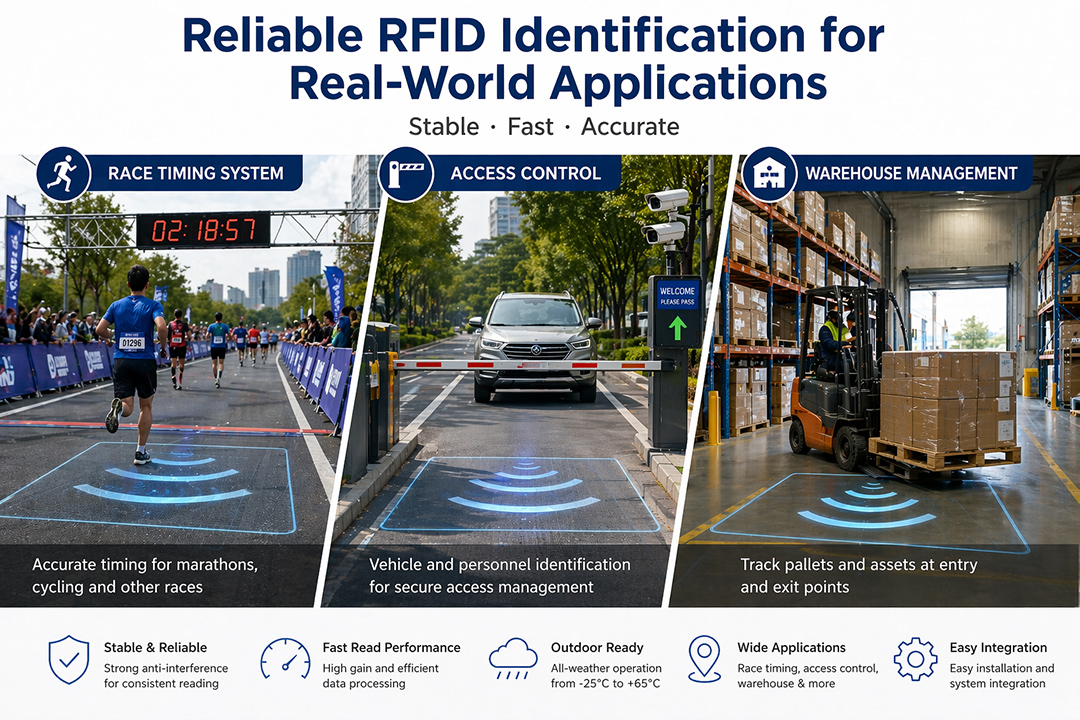
RFID in Retail: Key Applications for Inventory, Shelves, Checkout, and Store Operations RFID applications in retail

17 Mar 2026

Discover how RFID is used in retail to improve inventory accuracy, shelf visibility, checkout efficiency, and store operations. Learn the main RFID applications in modern retail. RFID applications in retail

Omni vs Directional Antenna: Which One Actually Works Better in Real Projects? Omni Fiberglass Antennas

13 Mar 2026

Omni antenna or directional antenna – which is better for your project? Learn the real-world differences, common deployment mistakes, and how to choose the right antenna based on your actual site conditions. Expert guide from BBT ANTENNAS. Omni Fiberglass Antennas

How to Choose the Right5g base station antenna for Your 5G Network: A Complete Guide

05 Mar 2026

In this comprehensive guide, we will walk you through the key types of base station antennas, the critical specifications you need to understand, and practical tips for selecting the best antenna solution for your specific deployment scenario. As a leading antenna manufacturer in China with over 30 years of experience, BBT ANTENNAS provides insights drawn from decades of antenna design and production expertise.

Ericsson and Three Sweden launch 5G SA network for enterprises

03 Feb 2026

Three Sweden has activated its Ericsson-powered 5G SA (Standalone) network to deliver programmable connectivity and network slicing to enterprise clients.

The operator’s activation of 5G SA architecture represents a hardware and software evolution rather than a simple speed upgrade. Powered by Ericsson, this commercial launch moves the operator away from 4G dependencies toward a fully cloud-native model. 5G horn antenna

Scaling Your WISP Network: A Guide to Deploying 20° wisp horn and 30° Horn Antennas

20 Jan 2026

Scaling Your WISP Network: When to Choose 20° vs. 30° Horn Antennas

As Wireless Internet Service Providers (WISPs) grow, they inevitably face a "density wall." Adding more subscribers to a single tower using traditional 90° or 120° sector panels often leads to self-interference and spectrum exhaustion. The solution lies in network densification using precise, Narrow angle horn antenna technology.

But how do you choose the right beamwidth? For most high-performance Point to multipoint antenna deployments, the choice comes down to 20° versus 30° models. As a professional China antenna manufacturer, BBT Antennas breaks down the technical differences to help you optimize your deployment.

High-Density WISP Deployments: The Strategic Value of 20° wisp horn Antennas and 30° wisp horn Antennas

14 Jan 2026

To maximize spectrum efficiency in 2026 and beyond, the shift to narrow beamwidths is inevitable. By integrating 20° and 30° broadband horns into your network, you ensure higher throughput, lower latency, and a path to future frequency expansions.

Overcoming Interference: Why WISPs Are Switching to 20° wisp horn and 30° wisp horn Narrow Angle Horn Antennas

05 Jan 2026

For Wireless Internet Service Providers (WISPs) globally, the greatest enemy isn't distance—it's noise. As the 5GHz and 6GHz spectrums become increasingly crowded, traditional sector antennas often struggle with side-lobe interference, leading to a higher noise floor and degraded packet performance. 20° wisp horn

Wi-Fi 8 is Coming: Why Advanced Terminal and Ceiling Antennas Matter More Than Ever

31 Dec 2025

Discover how MediaTek's Wi-Fi 8 impacts wireless hardware. As a top China antenna manufacturer, BBT Antennas offers advanced WiFi7, WiFi6 antenna, and Terminal antennas ready for the future of seamless mesh connectivity.

The Rise of 5G Massive IoT antenna: Opportunities for Antenna Manufacturers

24 Dec 2025

The landscape of global connectivity is undergoing a seismic shift. According to the latest research from Omdia, cellular IoT connections are projected to skyrocket to 5.9 billion by 2035. This explosive growth is not just a statistic; it represents a fundamental transformation in how enterprises, vehicles, and devices communicate, driven by the rapid maturation of 5G technologies.